 EN
EN ES
ES
Stainless Steel Cable Ties for Outdoor and Industrial Cable Fastening

Stainless steel is used when cable bundles, pipes, hoses, equipment parts, or outdoor fixtures require stronger fastening than standard plastic cable ties can provide. They are suitable for harsh environments, heavy-duty cable management, machinery maintenance, vehicle repair, electrical installation, and outdoor projects where strength, durability, and long-term stability are important.
For B2B buyers such as distributors, contractors, OEM customers, wholesalers, and industrial project purchasers, these metal fastening ties are not just a simple fastening accessory. They are a practical solution for applications where cables or components must remain securely fixed under pressure, vibration, heat, moisture, or outdoor exposure.
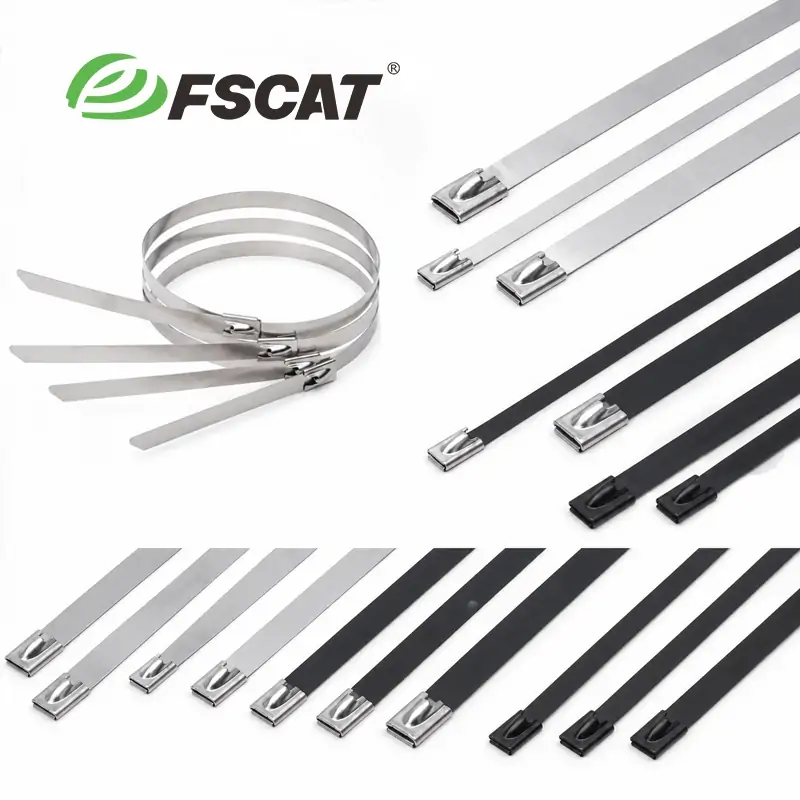
What Are These Metal Fastening Ties?
These metal fastening ties are designed to bundle and secure cables, wires, hoses, pipes, and mechanical parts. Compared with nylon cable ties, they are more suitable for demanding environments that require higher tensile strength, better temperature resistance, and stronger long-term holding performance.
Our products are available in different material grades, including 201 stainless steel, 304 stainless steel, and 316 stainless steel. Buyers can choose the proper material according to the working environment and corrosion resistance requirements.
Common product types include:
- BZ Uncoated Type
- BZP Coated Type
- BZPM Fully Coated Type
Uncoated versions are suitable for general industrial fastening. Coated and fully coated types are recommended when cable surface protection, insulation, or reduced metal contact is required.
Why Use Metal Strapping Bands Made of Stainless Steel?
These metal strapping bands are selected when ordinary plastic cable ties may not meet the working conditions. In outdoor, industrial, mechanical, and vehicle applications, fastening products often need to resist pulling force, vibration, weather exposure, and temperature changes.
The main advantages include:
- Stronger fastening for heavy cable bundles and pipes
- Better durability in outdoor and industrial environments
- Suitable for areas with vibration or mechanical stress
- Available in coated and fully coated types for cable protection
- Multiple material options for different corrosion environments
- Suitable for bulk supply, project use, and OEM packaging
For many industrial users, the value of these corrosion-resistant fasteners is not only strength, but also stable installation performance and reduced risk of cable loosening during long-term use.
Main Applications
Outdoor Cable Management
These fastening ties are commonly used for outdoor cable fixing, communication cables, fence fastening, sign installation, and equipment support. In exposed environments, cables may face wind, rain, sunlight, humidity, and temperature changes. They help keep cables and components firmly secured.
For outdoor applications, 304 stainless steel is often used for general outdoor conditions, while 316 stainless steel is recommended for coastal, marine, or high-corrosion environments.
Industrial Manufacturing
In industrial manufacturing, these metal ties are used to organise wires, secure pipelines, fasten hoses, and support cable routing on machines or production equipment. They are suitable for factories, automation systems, electrical equipment, mechanical frames, and control systems.
Common industrial uses include:
- Bundling machine control cables
- Fixing pipes and hoses
- Securing cables on equipment frames
- Supporting protective sleeves
- Organising wires in production lines
- Fastening components in vibration-prone areas
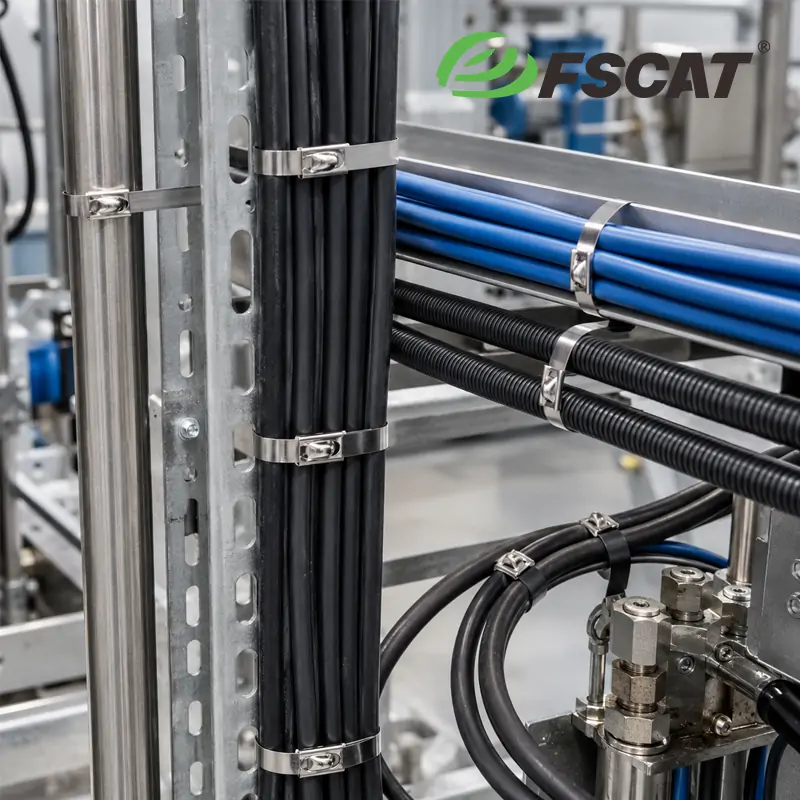
For industrial buyers, important selection factors include width, thickness, tensile strength, locking stability, edge smoothness, and packaging consistency.
Machinery Maintenance
During machinery maintenance, these metal fasteners can be used to repair or reinforce cable routes, secure loose parts, fix pipes, and hold protective covers. They are especially useful in areas where plastic ties may become weak due to heat, vibration, oil, or mechanical movement.
For maintenance teams, they provide a quick and reliable fastening method for temporary repair and long-term fixing.
Vehicle Maintenance
These metal ties are widely used in vehicle repair and transportation-related applications. They can be used to secure exhaust-related parts, heat shields, wiring harnesses, hoses, and protective sleeves.
Typical vehicle applications include:
- Exhaust pipe fastening
- Vehicle wiring organisation
- Hose fixing
- Heat shield support
- Protective sleeve fastening
- Cable bundling in high-vibration areas
For vehicle maintenance, coated types can be selected when cable surface protection is needed.
Electrical and Electronic Assembly
In electrical equipment, electronic product manufacturing, and control panel assembly, these metal fastening products can help organise internal wiring and fix selected components. They are suitable for applications where stable cable routing and neat installation are required.
Coated or fully coated types are often preferred when the tie may contact cable jackets, electronic wiring, or sensitive surfaces.
Product Specifications
Our metal cable ties are available in multiple sizes for different fastening requirements.
Common width options include:
- 4.6 mm
- 7.9 mm
- 10 mm
- 12 mm
- 12.7 mm
- 16 mm
- 19 mm
Common length range:
- 100 mm to 2000 mm
Thickness options:
- 0.25 mm
- 0.3 mm
- 0.4 mm
Minimum tensile strength range:
- 1000 N / 225 lbs
- 2220 N / 500 lbs
- 3115 N / 700 lbs
- 4100 N / 920 lbs
Different widths and thicknesses should be selected according to the cable bundle diameter, installation environment, required strength, and fastening load.
How to Choose the Right Metal Fastening Tie
When purchasing these fasteners, buyers should consider the following points:
Choose the Right Material
201 stainless steel is suitable for general fastening applications.
304 stainless steel is suitable for outdoor and industrial environments.
316 stainless steel is suitable for coastal, marine, chemical, or high-corrosion environments.
Choose the Right Surface Type
Uncoated types are suitable for general metal fastening and industrial use.
Coated types help reduce direct metal contact and provide surface protection.
Fully coated types are suitable for applications requiring improved cable protection or insulation.
Choose the Right Width and Length
Narrow ties are suitable for smaller cable bundles. Wider ones are recommended for heavier bundles, larger pipes, hoses, or applications requiring higher tensile strength.
Confirm Tensile Strength
For heavy-duty installation, machinery, vehicles, and outdoor projects, tensile strength is an important factor. Buyers should select the correct model based on load requirements and safety needs.
Use a Suitable Installation Tool
For industrial installation and bulk use, a dedicated tensioning tool can improve consistency, cutting efficiency, and installation quality.
Bulk Supply and OEM Support
For distributors, wholesalers, contractors, and OEM buyers, stable supply and consistent quality are important. These metal fastening ties can be supplied for standard product sales, project orders, private label packaging, and customised requirements.
Available support may include:
- Multiple material options: 201, 304, 316 stainless steel
- Uncoated, coated, and fully coated types
- Different widths and lengths
- Bulk carton packing
- OEM packaging support
- Label and carton mark customization
- Project order supply
- Specification selection support
Before placing an order, buyers are recommended to confirm the material grade, size, coating type, tensile strength, packaging method, and application environment.
Conclusion
These metal fastening ties are reliable products for outdoor cable management, industrial manufacturing, machinery maintenance, vehicle repair, and electrical assembly. With strong tensile strength, stable locking performance, and multiple material options, they are suitable for demanding applications where standard plastic cable ties may not be enough.
Whether you need 201, 304, or 316 stainless steel grades, or require uncoated, coated, or fully coated options, we can help recommend suitable specifications based on your market and application needs.
For bulk orders, OEM packaging, or project supply, please contact us with your required size, material, coating type, quantity, and application environment.