 EN
EN ES
ES
3 Outdoor Uses for UV-Resistant Nylon Ties

Every outdoor enthusiast or homeowner has experienced the frustration: you use a common plastic tie to secure a garden stake or bundle some patio lights, and within a few months of sunlight exposure, it turns brittle, cracks, and falls apart. Ordinary fastening straps simply aren’t built for the harsh ultraviolet radiation of the sun.
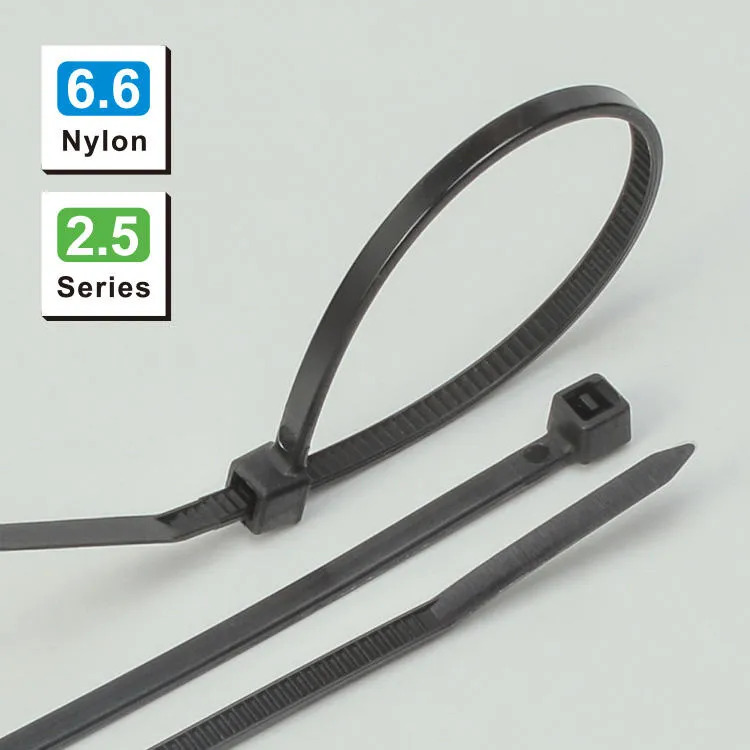
That’s where UV-resistant nylon ties come into play. These specially formulated fasteners contain carbon black or other UV inhibitors that block radiation, preventing polymer degradation. They maintain flexibility and tensile strength even after years of direct sunlight. Below are three practical outdoor applications where these durable ties truly shine.
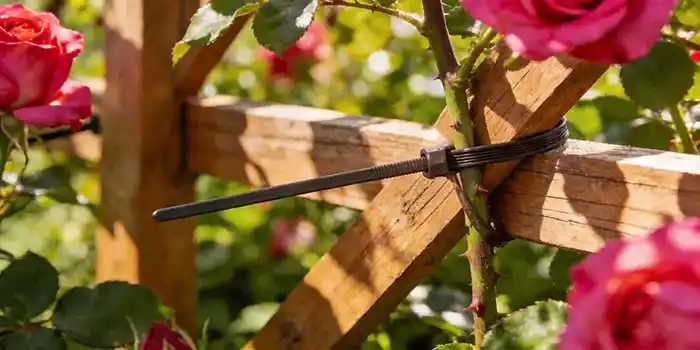
1. Trellising and Plant Support in Vegetable Gardens
Gardeners often need to gently secure climbing plants like tomatoes, cucumbers, or pole beans to stakes, cages, or trellises. Traditional twine can rot or cut into stems, while standard zip ties become brittle and snap under the summer sun.
How to do it right:
-
Choose a tie that is at least 0.14 inches wide to distribute pressure evenly.
-
Wrap the tie loosely around the main stem and the support structure, leaving room for stem thickening.
-
Check monthly and adjust as plants grow.
Because UV-resistant ties won’t weaken after weeks of exposure, you can leave them in place all season without worrying about sudden failure. This is especially valuable for perennial gardens or long-season crops.
Pro tip: Look for ties with a smooth, rounded edge to avoid abrading plant tissue. Some high-quality versions also include a self-locking mechanism that can be released and reused — perfect for training new growth.
2. Securing Outdoor Lighting and Low-Voltage Cables
Patio string lights, landscape pathway wires, and security camera cables all need to stay fastened to fences, posts, or walls. But sunlight is merciless on plastic fasteners. Within a single summer, ordinary ties can become chalky, crack, and drop your expensive lighting onto the ground.
Application steps:
-
Before installation, wipe the mounting surface clean of dust or moisture.
-
Bundle wires neatly, avoiding sharp bends that could damage insulation.
-
Apply a UV-resistant tie around the bundle and the anchor point.
-
Cut off the excess tail flush with the locking head to prevent snagging.
These ties typically retain their rated tensile strength for over 1,000 hours of accelerated UV testing. That translates to several years of real-world outdoor use. For coastal or high-altitude areas with intense sun, UV-stabilized nylon is a must-have.
Common mistake to avoid: Don’t over-tighten around delicate low-voltage wires — you only need to prevent movement, not crush the insulation. A snug fit with a finger’s gap works best.
3. Camping Gear Organization and Temporary Shelter Fixes
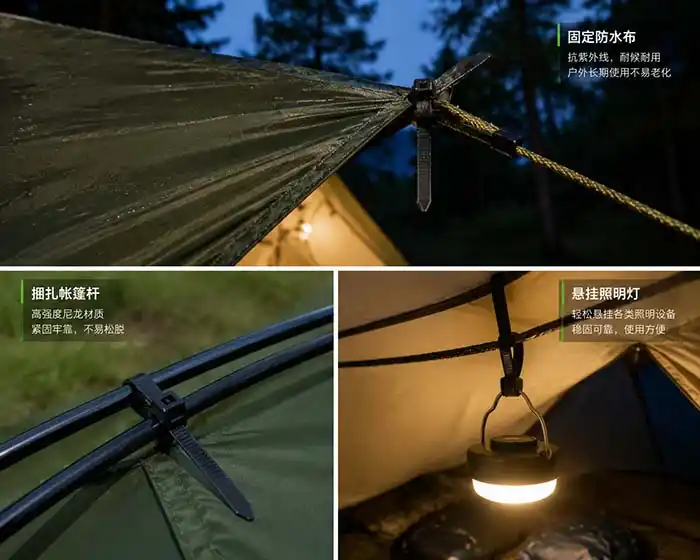
Campers and overlanders know that sunlight at high altitudes is especially brutal. Tarps, tent pole repairs, sleeping pad straps, and gear loft attachments often rely on small fastening loops. When a cheap strap fails in the backcountry, you’re left with flapping tarps or disorganized equipment.
Practical camping uses:
-
Tarp tie-downs: Replace missing grommet rings by cinching a UV-resistant tie through the tarp edge and around a tree or stake.
-
Pole splinting: If a tent pole splits, use two ties above and below the crack to bind it to a short section of aluminum tube or a stick.
-
Gear loft attachment: Create attachment points on the inside of a tent’s roof loops to hang a lantern or a small bag.
Because these ties are lightweight and take almost no space, keep a dozen in your repair kit. They perform in both summer sun and winter cold (typical service temperature range: -40°F to 185°F). And unlike metal wire, they won’t corrode or scratch your gear.
Expert insight: Many camping-specific fasteners cost five times more, but standard UV-resistant nylon ties with a smooth head profile work just as well. The key is to buy from a manufacturer that clearly states UV stabilization — not all “nylon” ties include this additive.
How to Choose the Right UV-Resistant Fasteners
Not all ties marketed for outdoor use are equal. Look for these indicators of genuine UV protection:
-
Black or dark gray color — though some specialty clear UV-stabilized grades exist.
-
Manufacturer’s specification of “UV stabilized” or “suitable for outdoor applications” with test data.
-
Material: Nylon 6/6 with UV additives, or polypropylene (less strong but also UV-resistant).
Avoid ties that are translucent or shiny white unless they specifically state “UV-resistant” — those degrade quickly. Also, remember that even UV-resistant nylon will eventually show surface chalking after 5–7 years, but it retains most of its break strength.
When to Replace Outdoor Ties
Inspect your installed ties annually. Signs of aging include:
-
Surface powdering (white dust when rubbed)
-
Cracking around the locking head
-
Loss of flexibility (becomes stiff and snaps when bent)
If you see any of these, replace them promptly. For critical applications like supporting heavy cables or structural garden supports, consider a two-year replacement cycle.
Get Professional-Grade Fastening for Your Projects
For reliable, UV-stabilized fastening solutions that hold up season after season, check out Fscat’s selection of heavy-duty outdoor ties. Our products are manufactured with premium nylon 6/6 resin and carbon black UV inhibitors, tested to withstand over 2,000 hours of accelerated weathering. Whether you need versatile fastening options for garden trellises or durable cable management for exterior lighting, we offer multiple lengths, widths, and tensile strengths to match your application. Explore the full range and find the perfect fit for your next outdoor project.
Note: The images in this article are for reference only.