 EN
EN ES
ES
How to choose a suitable cable tie?
Important specifications to consider when searching for cable ties include material, mechanical strength, maximum diameter, length and width, and temperature range.
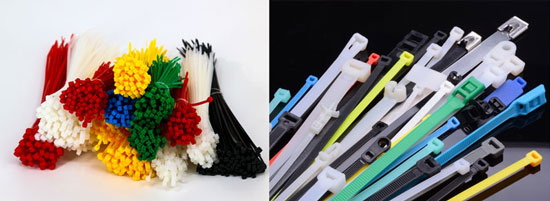
1. Working Environment
The working environment is the most important thing you need to consider when choosing cable ties. It determines what material, size and function of cable tie you need. Because cable ties don't work well in every situation, different materials are suitable for different environments.
For example, in places where the temperature is low all year round, you can choose low temperature resistant cable ties, which can be used at minus 40 degrees Celsius. Plastic items are not as durable in strong UV rays, so they are not suitable for Australia and Africa. Choosing cable ties with UV protection can solve this problem
2. Material
According to the use environment, choose the appropriate material.
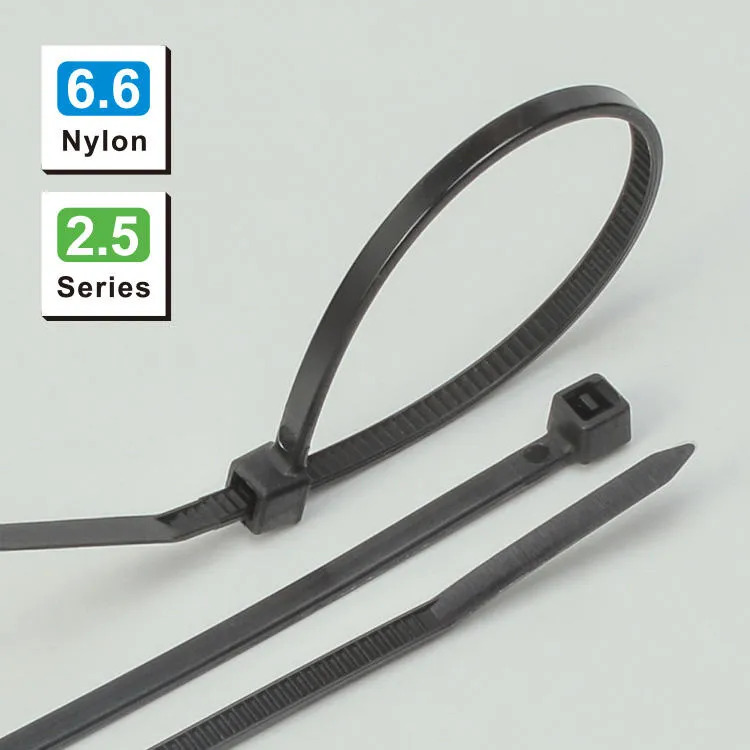
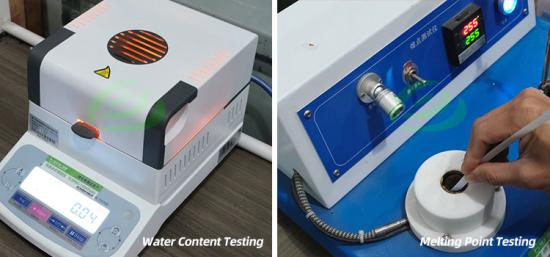
The raw materials of cable ties are PA66 and PA6, and we can also produce mixed materials. 50% PA66 + 50% PA6, which can reach 80% of the quality of PA66 cable ties, is a more economical choice.
PA66, with a higher melting point of 260°C, is more durable, high temperature resistant, and has better strength and stiffness even in high temperature environments. The melting point of PA6 is 220°C, which is less durable than PA66, and the price is cheaper than PA66.
3. Dimensions
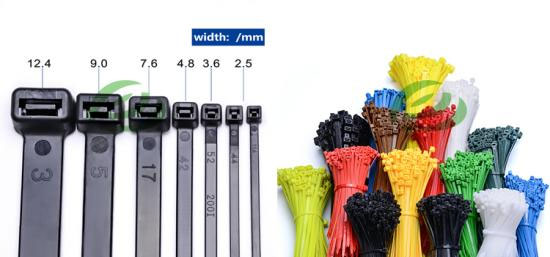
The width of ordinary cable ties is 2.5mm, 3.6mm, 4.8mm, 7.6mm, 9mm, 12.4mm.
The lengths are 4inch, 6inch, 8inch, 10inch, 11inch, 14inch, etc.
The width determines the tensile strength you need. Usually a 3.6mm cable tie can bear 18kg.
The length determines the diameter of the bundle. When buying cable ties, first they will ask you for your size, just like you would go to a clothing store.
4. Color and Price
Color is a matter of personal preference. The price depends on the material and size you want. The higher the quality, the higher the price. Also depends on where you want to use it. Strict environments will require higher quality cable ties, but if you're just buying for home use, regular grade will do just fine.