 EN
EN ES
ES
The Truth About Nylon Cable Tie Tensile Strength

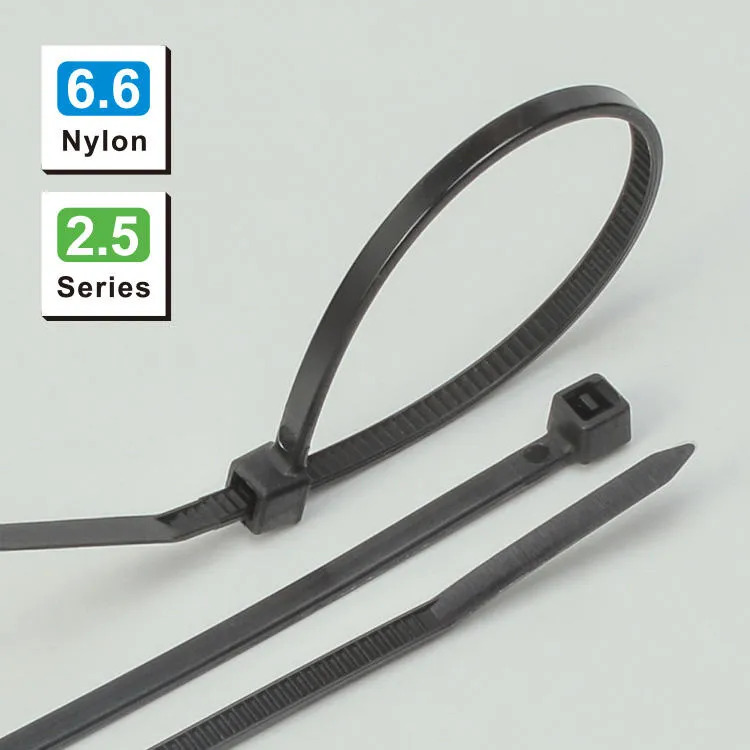
The tensile strength of a nylon cable tie is not an absolute number printed on a specification sheet. It‘s a dynamic property that shifts with temperature fluctuations (from -40°C to 85°C), humidity levels (moisture absorption up to 2.8% in PA66), installation technique, and the hidden phenomenon called creep — the slow, relentless relaxation of polymer chains under sustained load. When a maintenance engineer pulls a tie tight around a wiring harness in an automotive assembly line or a solar panel array, that 120-lb rating on the packaging is a snapshot under ideal laboratory conditions. Ask any field technician: the real holding power can be 30–40% lower in a vibrating engine compartment or a humid coastal environment.
What Those Load Numbers Actually Mean for Your Budget
Let me translate tensile ratings into maintenance costs because that‘s what keeps plant managers awake at night. A standard light-duty bundling strap rated at 18 pounds might seem adequate for small electronic assemblies — until you factor in uv degradation and thermal cycling. In real-world industrial applications, you should derate the advertised tensile value by at least 25–30% for dynamic environments, 40% for continuous high humidity above 85% RH, and an additional 20% for installations where uv exposure is unavoidable.
Here‘s the hard truth from field data: nylon 6/6 cable ties typically support 4–8 mm width and 18–50 lbs of static load rating, while wider industrial-grade fastening straps handle up to 175–250 lbs. But the Ponemon Institute found in 2023 that a single underspecification failure in a power distribution unit caused $740,000 in lost production time. That‘s the cost of treating tensile numbers as guarantees rather than engineering starting points.
Polyamide polymer ties derive their strength from semi-crystalline molecular alignment. During manufacturing, the cooling rate determines how tightly the hydrogen bonds lock together — slower cooling promotes larger crystals with higher shear resistance. The difference between a reputable brand and a generic import often comes down to process control, not raw material.
PA66 vs PA6: The Strength Hierarchy Nobody Explains Clearly
Most buyers assume all polyamide locking straps are created equal, but the engineering plastic world divides sharply into two camps. PA66 (nylon 6/6) delivers approximately 150 MPa tensile strength with a melting point of 250°C, superior uv resistance (retaining 92% of original strength after 1,000 hours of exposure), and lower moisture absorption at 1.5–2.8%. PA6 (nylon 6), by contrast, reaches only 80 MPa with a 220°C melting point, absorbs 2.5–3.5% moisture, and degrades to 78% of original strength under the same uv exposure.
The decision matrix is straightforward but rarely explained this way:
-
PA66 is for automotive engine compartments, outdoor electrical installations, and machinery where vibration and heat demand the highest tensile load performance
-
PA6 works perfectly for indoor cable management, temporary fixtures, and applications where flexibility trumps raw holding power
Yet declaring PA66 “always better“ ignores the humidity problem. In continuous humidity above 85% RH, PA66 absorbs up to 10% moisture — and tensile strength drops by as much as 40%. For wastewater treatment or marine installations, specialized nylon 12 cable ties with less than 0.3% moisture absorption actually outperform PA66 dramatically. One size fits none when water is involved.
UL 62275 Certification: The Fire Safety Requirement You Can‘t Ignore
If you‘re specifying wiring harness ties for any commercial or industrial electrical installation, UL 62275 certification isn‘t optional — it‘s the legal floor. This standard (based on IEC 62275:2022) defines exactly how load-bearing cable organizers must perform under fire conditions, mechanical stress, and environmental exposure. The UL Type 2S/21S rating represents the highest tier, verifying that the tie can withstand plenum-rated air handling spaces — meaning it won‘t emit toxic smoke during a fire.
Here‘s what engineers rarely communicate: UL 62275 Type 21 certification tests the tie‘s ability to maintain locking integrity at -40°C and survive 1,000 hours of uv exposure without brittle failure. A high-strength bundling tie without UL listing might have identical lab-measured tensile strength but will lose 50–70% of its useful life outdoors — shortening from 10 years to 3–5.
For context, the global wire management fastener market reached approximately $2.3 billion in 2024 and is projected to grow to $3.2 billion by 2031 at a 6.00% CAGR. That growth is driven by data center expansions, renewable energy projects, and the automotive industry‘s shift to lighter, more tightly packed wiring harnesses — all of which depend on certified, reliable fastening systems.
The Creep Problem: Why Static Load Ratings Lie
Anchor a nylon restraining strap around a bundle under constant tension, and over months — sometimes years — you‘ll notice the loop has loosened. That‘s creep: the gradual reorganization of polymer chains under sustained stress. Unlike metal fasteners, polyamide ties never fully relax back to their original length. In dynamic environments like HVAC systems or conveyor machinery, vibration accelerates this process, reducing effective tensile capacity by another 25–40% below the static rating.
A wind turbine technician told me once: “One failed cable tie can cost us weeks of downtime.“ He wasn‘t exaggerating. A single break creates a rub point on critical cables, and replacing them requires tower shutdown and a crew — easily $50,000 in lost production.
So how do you design around creep? Two strategies:
-
Over-specify by 30–50% — a 120-lb tie for a 60-lb static load gives you a safety margin for long-term relaxation
-
Use wider ties — 7.6 mm width models hold over 175 lbs and distribute stress more evenly than 4.8 mm variants
Custom Formulations and UV Stabilization: When Standard Ties Fail
Standard natural nylon zip ties (the translucent white ones) have an outdoor life expectancy of only 1–2 years before uv radiation embrittles them. The black pigment in uv-stabilized ties isn‘t just for appearance — carbon black absorbs uv radiation before it can break polymer bonds, extending outdoor service life to 5–10 years. For truly demanding environments, nylon 612 formulations push that to 20 years.
Manufacturers offering custom-engineered polyamide fasteners also adjust additive packages for specific threats: heat stabilizers for engine compartments, hydrolysis resistance for irrigation systems, or flex modifiers for applications requiring repeated bending without failure.
What Customization Actually Looks Like
-
Flame-retardant compounds (UL94 V-0 rating) for control cabinets and avionics
-
Low-temperature formulations for cold storage or arctic installations (functioning down to -60°C)
-
High-heat grades (PA46) with melting points approaching 295°C for under-hood automotive use
-
Colored ties for color-coded bundle identification in multi-voltage panels
A purchasing manager for a solar farm operator once explained why they switched to a custom supplier: “We were replacing standard ties every 18 months on our ground-mount arrays. The uv degradation was visible — cracks, chalky surfaces. Using outdoor-rated polymer ties with proper uv stabilization extended that to 8 years. Labor savings alone paid for the upgrade twenty times over.“
Nylon vs. Stainless Steel: The Trade-Off No One Wants to Admit
Let me be blunt: metal cable ties have higher tensile strength starting where nylon maxes out — often exceeding 300 lbs even in narrow bands. They never creep, never absorb moisture, and laugh off uv radiation and extreme temperatures from -80°C to 538°C. So why isn‘t everyone switching?
Because steel cuts cable jackets when over-tightened. It requires specialized tensioning tools (manual or pneumatic) to trim tails flush — a poorly cut steel tail can slice an electrician‘s glove and hand. Installation time per tie is at least double that of a high-tensile plastic strap. And steel costs five times more per piece for comparable size.
Many projects use both: for general bundling and vibration damping, steel for primary structural lashing where a failure would be catastrophic. The smart engineer doesn‘t pick one material — they match the material to the load, the environment, and the maintenance interval.
Beyond Static Strength: Vibration, Fatigue, and Installation Technique
The weakest link in any cable management tie isn‘t the material — it‘s the person pulling it. Over-tensioning creates microfractures at the locking head; under-tensioning allows bundle movement that accelerates fretting wear. The sweet spot is a firm closure without visible deformation of the cable jacket. For precision applications, tensioning tools with torque limiters eliminate guesswork.
Wire harness securing strips are tested for static tensile strength, but real-world failures usually come from fatigue — repeated small tensions from vibration, thermal expansion cycles, or wind loading that gradually crack the lock wedge. PA66‘s fatigue resistance is excellent among polymers, but in continuous vibration environments (train undercarriages, offshore platforms), scheduled replacement at 2–3 year intervals is cheaper than unscheduled failure.
The Single Most Overlooked Factor: Moisture
Here‘s where engineering intuition often fails. A PA66 fastener absorbs moisture from humid air — up to 2.8% by weight at equilibrium. That moisture actually increases flexibility and impact resistance but decreases tensile strength by 30–40% when fully saturated. If you‘re installing industrial-strength bundling products in a humid environment (southeast Asia summer, wastewater treatment plant, or coastal facility), the tie that tested at 175 lbs in the lab may only deliver 100 lbs of holding power after six months in service.
The solution hierarchy:
-
PA12 ties (<0.3% absorption) for marine, chemical, or consistently humid environments
-
Proper derating — spec at least 25% higher than needed load
-
Ventilation — reducing local humidity extends tie lifespan
Checklist for Purchasing: What Engineers Actually Need to Verify
Before you place that bulk order for nylon-based wire ties, run through this checklist:
-
UL 62275 listing? Type 21S for plenum spaces, Type 2 for general use. Demand the certification documentation.
-
PA66 or PA6? Know which your application demands.
-
UV stabilization? Black pigment is non-negotiable for any outdoor or window-exposed installation.
-
Moisture absorption spec — request the 85% RH / 30-day data.
-
Serrations on the interior band? This increases grip and prevents bundle slippage under vibration.
-
Batch traceability — critical for safety-critical installations (aviation, medical, nuclear backup systems).
A Final Word from the Field
I‘ve watched maintenance teams replace hundreds of ties on offshore wind platforms because someone chose standard PA66 instead of PA12 for a salt-spray environment. I‘ve seen data center cooling failures traced to ties that crept loose under thermal cycling, letting cables droop into fan blades. And I‘ve witnessed automotive recalls averted because a quality engineer insisted on UL-listed ties with verified lot testing.
The tensile strength of a nylon cable tie is real — but it‘s conditional. It exists within a specific temperature window, a narrow humidity range, and only when properly installed. means matching the material science to the actual, messy, imperfect conditions of your facility. Do that, and that 120-lb rating will deliver every pound for years. Ignore the variables, and you‘re gambling with downtime, safety, and your budget.