 EN
EN ES
ES
How Nylon Cable Ties Achieve Tensile Strength
A quality control manager once showed me two identical-looking fasteners from different suppliers. Same length, same width, same color. One snapped at 42 pounds. The other held past 78 pounds before failing. Same plastic type. Same dimensions. What made the difference?
The answer lies in engineering details invisible to the naked eye. Tensile strength isn't magic—it's the result of deliberate choices in material science, mold design, and process control. Understanding how manufacturers achieve it helps you separate genuine quality from surface-level resemblance.
Let's pull back the curtain on what creates holding power.
The Material Foundation: Polymer Architecture
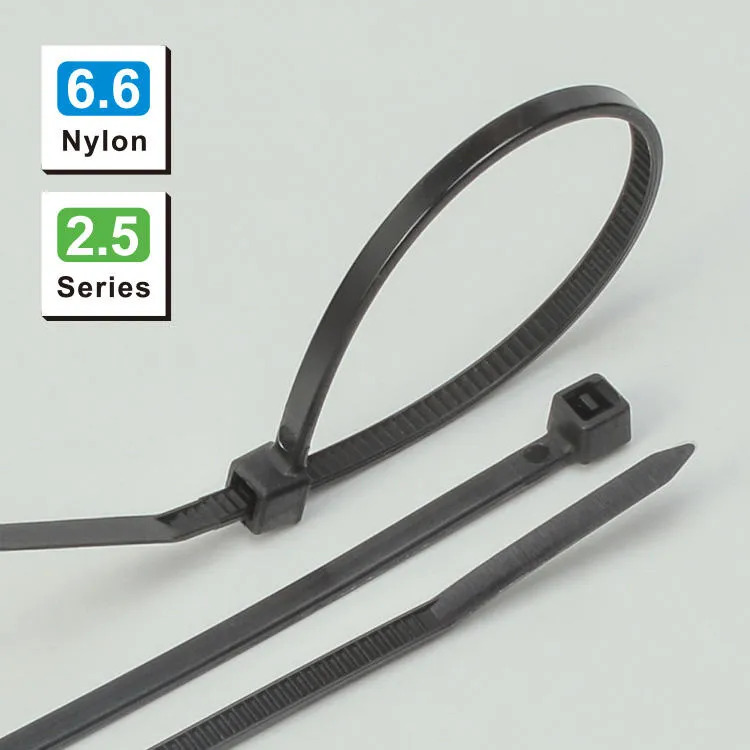
Every plastic fastener starts with raw resin. Nylon 6/6 dominates the market for good reason—its molecular structure balances strength, flexibility, and cost. But not all nylon is equal.
- Molecular weight matters. Higher molecular weight means longer polymer chains. Longer chains entangle more effectively, distributing stress across a larger network. Premium grades use virgin resin with controlled molecular weight distribution. Recycled or regrind material contains shorter, broken chains that create weak points.
- Moisture conditioning plays a surprising role. Freshly molded nylon is brittle because it's too dry. Proper conditioning allows moisture absorption (typically 1.5-2.5% by weight), which plasticizes the material and improves toughness. Under-conditioned ties snap. Over-conditioned ones become soft and creep under load.
According to polymer testing data (ASTM D4066 classification), properly formulated nylon 6/6 achieves a baseline tensile strength of 12,000 psi in standard test conditions. Yet final product performance varies by ±30% based on processing variables.
The Injection Molding Process: Where Strength Is Built
Raw material only sets the ceiling. The molding process determines how much of that potential reaches the finished product.
- Melt temperature must stay within a precise window—typically 480-530°F (250-277°C) for nylon 6/6. Too low, and the material doesn't flow completely into thin sections like locking teeth. Too high, and thermal degradation shortens polymer chains before they even enter the mold.
- Injection pressure affects packing density. Higher pressure forces material into every cavity detail, eliminating voids that act as stress concentrators. But excessive pressure creates internal stresses that later cause cracking.
- Cooling rate determines crystallinity. Faster cooling produces smaller crystals and higher tensile strength. Slower cooling allows larger crystals to form, increasing toughness but reducing ultimate strength. Precision molds with balanced cooling channels achieve optimal rates across all cavities.
A mold engineer explained it simply: "You can have the best resin in the world, but if your cooling is off by five degrees, you lose 15% of your tensile strength."
Molecular Orientation: The Hidden Reinforcement
Here's the part most people never see. During injection, molten nylon flows from the gate (where material enters the mold) toward the far end. This flow aligns polymer chains along the direction of movement—a phenomenon called molecular orientation.
Tensile strength is highest when pulling parallel to this alignment. That's why quality fasteners show directional strength—they're engineered to handle load along the strap length, not across it.
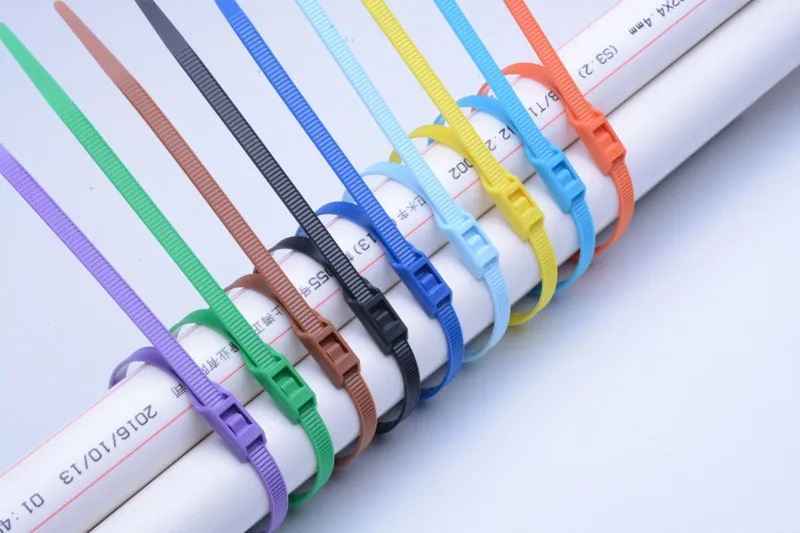
Multiple gates or poorly designed flow paths create inconsistent orientation. Weak zones develop where chains run perpendicular to the load direction. Premium manufacturers use single-point gating at the strap end, ensuring uniform alignment from head to tip.
Third-party testing confirms that properly oriented fasteners achieve 20-35% higher tensile strength than identical parts with random chain alignment.
The Locking Mechanism: Where Force Concentrates
Tensile strength isn't only about the strap breaking. The locking head must withstand the same force without failing first.
- Barb geometry determines how securely the strap engages. A sharper, deeper barb cuts into the strap's surface, distributing load across more material. Shallow or rounded barbs concentrate force at a single point, promoting premature failure.
- Tooth engagement length matters. Longer engagement zones spread stress over more surface area. Some designs use double-barbs or multi-tooth configurations for critical applications.
- Stress distribution within the head requires careful radius design. Sharp internal corners create stress risers—points where force concentrates dramatically. Finite element analysis (FEA) helps engineers identify and eliminate these weak spots before mold cutting begins.
A 2021 study of locking mechanism failures found that 62% originated at poorly radiused internal corners within the head, not along the strap body.
For engineers who want to examine detailed locking mechanism specifications across different tensile grades, review the technical design library with FEA data and cross-section diagrams.
Testing Verification: Proving the Engineering
All the engineering means nothing without verification. Reputable manufacturers test every production batch:
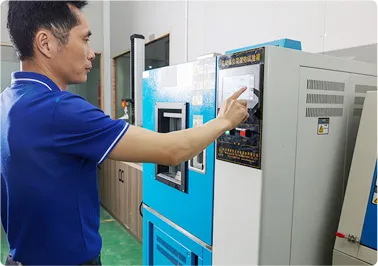
- Tensile pull testing follows standardized methods (ASTM D638 or IEC 62275). A universal testing machine applies increasing force at a controlled rate until failure. The peak force becomes the rated tensile strength.
- Statistical process control tracks critical parameters: melt temperature, injection pressure, cooling time, and part weight. Consistent part weight indicates stable density—a direct correlate of tensile strength.
- Destructive sampling pulls ties from every cavity in multi-cavity molds. Variations between cavities reveal mold wear or unbalanced flow paths.
One automotive supplier reduced field failures by 53% after switching to a vendor that provided cavity-specific tensile data for every production lot.
Common Failure Points in Manufacturing
Even good designs fail when processes drift:
- Short shots occur when material doesn't fill the mold. Incomplete locking teeth or thin strap sections break at low loads.
- Flash (excess material at mold parting lines) creates stress risers. Trimming flash leaves microscopic notches where cracks initiate.
- Gate vestige issues happen when the cutoff point leaves a raised bump. That bump becomes a stress concentrator under tension.
- Inconsistent cooling between cavities produces parts with identical appearance but different tensile properties. Good manufacturers monitor each cavity separately.
For quality teams needing batch-level verification data and process control documentation, access the quality assurance portal with test reports and SPC charts.
Material Additives and Their Trade-offs
Pure nylon 6/6 offers excellent tensile strength. But real-world applications require modifications that affect performance:
| Additive | Purpose | Tensile Impact |
|---|---|---|
| UV stabilizers | Sunlight resistance | -5% to -10% |
| Glass fiber | Increased stiffness | +30% to +50% (but less flexible) |
| Heat stabilizers | High-temp tolerance | -0% to -5% |
| Flame retardants | Fire safety | -15% to -25% |
| Color pigments | Identification | -0% to -8% (varies by color) |
Data compiled from material supplier technical bulletins
Understanding these trade-offs prevents over-specification. A UV-stabilized outdoor tie might have slightly lower tensile strength than an indoor equivalent—but the indoor tie will fail within 18 months of sun exposure. The "weaker" UV tie actually performs better in its intended environment.
The Takeaway: Engineering Transparency
Tensile strength isn't a mysterious property. It's the sum of material selection, molding precision, molecular alignment, locking geometry, and quality verification. When a supplier can't explain how they achieve their ratings—or won't share test data—that silence tells you everything.
The best manufacturers treat tensile strength as a designed outcome, not an afterthought. They optimize every variable within proven windows, verify with statistical methods, and document results for customer confidence.
If you're sourcing fasteners for applications where failure isn't an option, explore Fscat's engineering-grade options with full transparency into materials, process controls, and batch test results. Because knowing how strength is achieved is the first step to trusting that it will be there when you need it.