 EN
EN ES
ES
5 Pain Points Fixed by Nylon Cable Ties

For anyone managing wires in industrial workshops, commercial buildings or outdoor infrastructure, messy wiring, fragile fasteners and hidden safety risks have long been unavoidable troubles. Most on-site technicians and project managers spend extra time fixing loose bundles, replacing broken accessories and troubleshooting electrical faults caused by chaotic wiring every month, and a set of reliable bundling tools can reverse this inefficient status quo. Proper wire fastening directly cuts maintenance costs and lowers safety hazards, and Nylon Cable Ties stand out as a practical, cost-efficient option to resolve these daily wiring frustrations for businesses of all scales. Industry data from 2025 shows that 61% of operation sites face recurring cable arrangement issues, and nearly 87% of server and equipment rooms encounter unexpected outages triggered by unregulated wire bundling, making targeted optimization for wiring accessories an urgent upgrade demand for modern operation management.
1. Fragile Ordinary Fasteners with Short Service Life
A common complaint from frontline maintenance teams revolves around cheap, thin binding accessories that snap easily under slight tension or temperature changes. Ordinary low-grade plastic strips tend to turn brittle in low-temperature winters and soften or deform under high heat in enclosed equipment cabins. Frequent replacement not only wastes procurement budgets but also interrupts normal equipment operation, forming a vicious cycle of repeated maintenance.
Low-durability wire fasteners cannot withstand long-term mechanical vibration, which is prominent in manufacturing workshops, transportation equipment and mechanical transmission scenarios. Many traditional binding parts lose their locking force within a few months, leading to scattered wires again. For small and medium-sized enterprises with limited maintenance manpower, this trivial but frequent replacement work seriously drains operational efficiency. To end this repetitive loss, it is critical to select fastening supplies with stable structural toughness and aging resistance.
2. Chaotic Wire Layout Triggering Safety Hazards
Tangled and scattered wires are never just an aesthetic problem; they carry tangible safety threats that cannot be ignored. According to the 2021 Liberty Mutual Workplace Safety Index, slips, trips and falls caused by exposed messy wires lead to over $19 billion in annual compensation and accident losses in the United States alone. In factory workshops and public utility spaces, disorderly wiring also increases the risk of cable skin wear, short circuits and even local fires.
Unorganized cable routing also hinders daily inspection and later equipment upgrading. When countless wires are intertwined, technicians struggle to quickly distinguish circuit lines, greatly extending the time for fault investigation and equipment maintenance. Data from cable management industry reports points out that irregular wire arrangement increases the average fault recovery time by 340%, which is a huge hidden cost for enterprises that pursue stable operation. Reasonable centralized bundling can standardize wire distribution, isolate potential safety risks and simplify daily management work.
3. Poor Environmental Adaptability of General Binding Parts
Different application scenarios pose diverse environmental tests for wire binding accessories, yet most universal fasteners lack targeted performance optimization. In humid coastal areas, damp workshops or outdoor rainy environments, ordinary plastic binding strips are prone to mildew, corrosion and structural damage. In high-salt and high-humidity working conditions, the attenuation of binding strength will be accelerated significantly.
Weather-resistant wire bundling components have become a rigid demand for cross-scenario deployment. Traditional polypropylene binding materials have weak anti-aging ability, with obvious performance degradation after long-term exposure to ultraviolet rays and harsh chemical gases. Industrial production lines, new energy power stations and outdoor monitoring projects all need binding supplies that can resist temperature differences, moisture and weak chemical erosion. Blindly using low-cost general accessories will only lead to accelerated loss and higher long-term comprehensive costs.
4. Difficult Installation & Inflexible Use Limits
Many rigid fastening tools on the market have complicated installation steps and poor flexibility, making it hard to operate in narrow gaps, curved corners and compact equipment interiors. Some hard binding parts cannot adjust the bundling range freely, unable to adapt to wire combinations of different thicknesses and quantities, resulting in either over-tightened extrusion damage or loose and unstable bundling.
Flexible adjustable cable fastening tools can greatly improve on-site operation efficiency. Field installers often need to complete wiring arrangement in limited spaces, and bulky or overly rigid accessories will greatly slow down the construction progress. In addition, one-size-fits-all binding specifications cannot meet personalized bundling needs, such as dense circuit integration and large-diameter wire combination fixation. A good binding product should balance easy manual operation, flexible size adaptation and stable locking performance to lower the technical threshold for construction personnel.
5. Single Specification Unable to Meet Customized Needs
With the continuous refinement of industrial production and commercial facility construction, standardized single-specification binding products can no longer cover diverse application demands. From ultra-fine internal circuit bundling of electronic equipment to heavy-duty large cable fixation of engineering facilities, different scenarios require targeted differences in tensile strength, length, color and special functional design.
Custom-sized wire fixing accessories help enterprises achieve refined management. Many manufacturers only provide conventional sizes, forcing buyers to mix multiple products or compromise on usage effects. Special industries such as new energy, medical equipment and marine engineering also need flame retardant, insulation and anti-corrosion enhanced binding styles. The lack of diversified choices often makes on-site wiring optimization work constrained, affecting the overall standardization and service life of the project.
Practical Solution: Balanced Performance to Resolve Wiring Dilemmas
After sorting out the five core pain points of wire management, it is not difficult to find that the fundamental demand of buyers is to find a high-cost-performance product with balanced durability, environmental adaptability, flexible use and diversified specifications. When comparing common fastening materials on the market, metal locking parts have ultra-high strength but high cost, poor flexibility and easy conductive risks in partial electrical scenarios; ordinary plastic low-price strips have cost advantages but obvious shortcomings in aging resistance and structural stability.
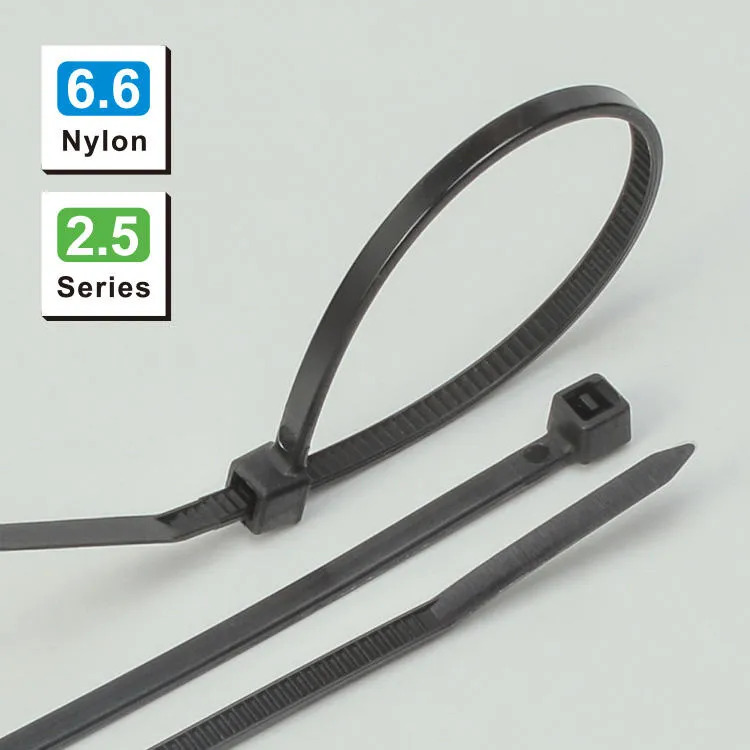
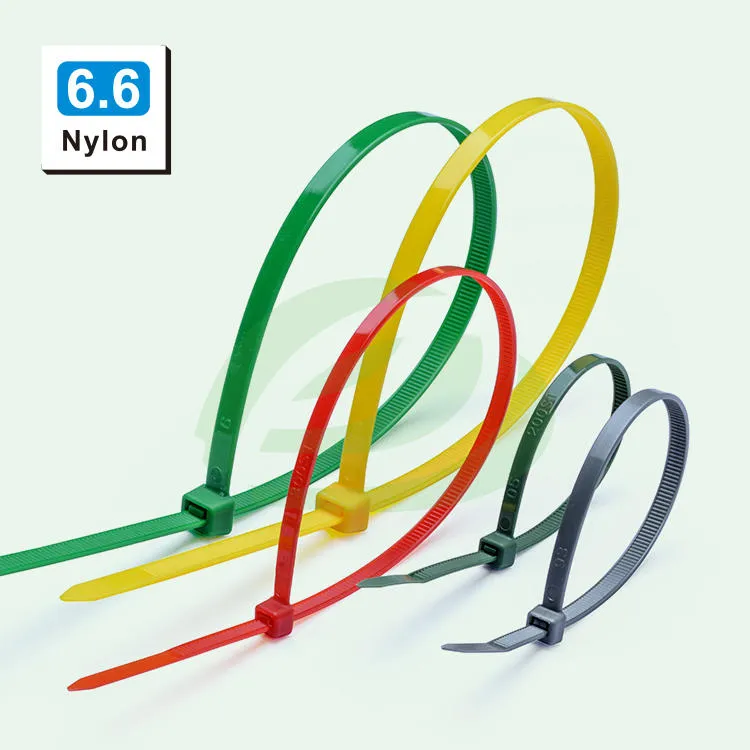
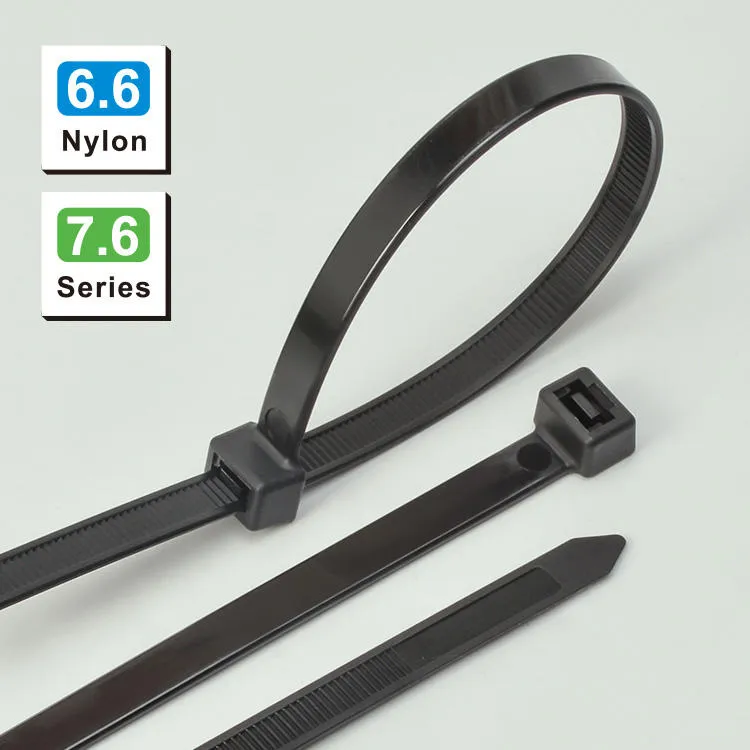
In contrast, the second type of binding supply with balanced comprehensive performance can perfectly fill the market gap. As a mature multi-scenario fastening material, Nylon Cable Ties adopts optimized nylon 6.6 material formula, retaining excellent flexibility while improving overall tensile strength and locking stability. Professional industrial test data proves that high-quality modified nylon materials can maintain 94% of the initial clamping force after 18 months of continuous vibration, far exceeding the service life of ordinary plastic products.
In terms of environmental adaptation, conventional styles meet daily indoor and conventional outdoor use, while UV-stabilized upgraded styles can resist ultraviolet erosion, with an outdoor service life extended to 2-5 years. Its internal molecular structure has low water absorption, stable performance in 95% high humidity environment, and can resist mild acid and alkali corrosion, covering most industrial, commercial and civil scenarios. Different from the single function of competing products, this series of products supports color classification marking, multi-size optional and special process customization such as flame retardant and insulation, perfectly matching the personalized needs of different industries.
In actual operation, the lightweight and flexible design allows one-hand quick locking and binding, without relying on complex tools, effectively shortening the time cost of wiring arrangement. The self-locking tooth structure ensures tight binding without slipping, and will not cause excessive extrusion damage to the cable skin. For enterprise procurement, its moderate price, low replacement frequency and diversified specifications can reduce comprehensive procurement and maintenance costs, creating stable and standardized wiring conditions for long-term operation.