 EN
EN ES
ES
What Does a Nail Cable Clips Do?

Cable clips are ubiquitous in our lives and work as tools for securing cables and wiring to fixed points.
This article will provide an in-depth look at the types of cable clips, their uses, and their importance.
What are cable clips used for?
A cable clips is a tool primarily used to secure cables and wiring to fixed points, serving a handy dual purpose.
1. Keep it tidy
Cable clips can help eliminate loose wires to maintain a neat appearance in your home or professional environment.
2. Stay away from danger
What's more, they are important for protecting cables and individuals from electrical and tripping hazards, thus helping to ensure safety.
3. Fixation
Cable clips can also be used to secure heavier conduits or pipes, especially those of larger sizes.
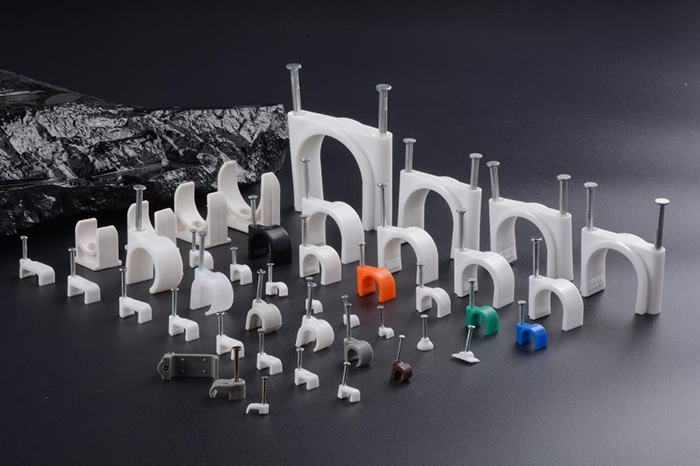
How many types of cable clips are there?
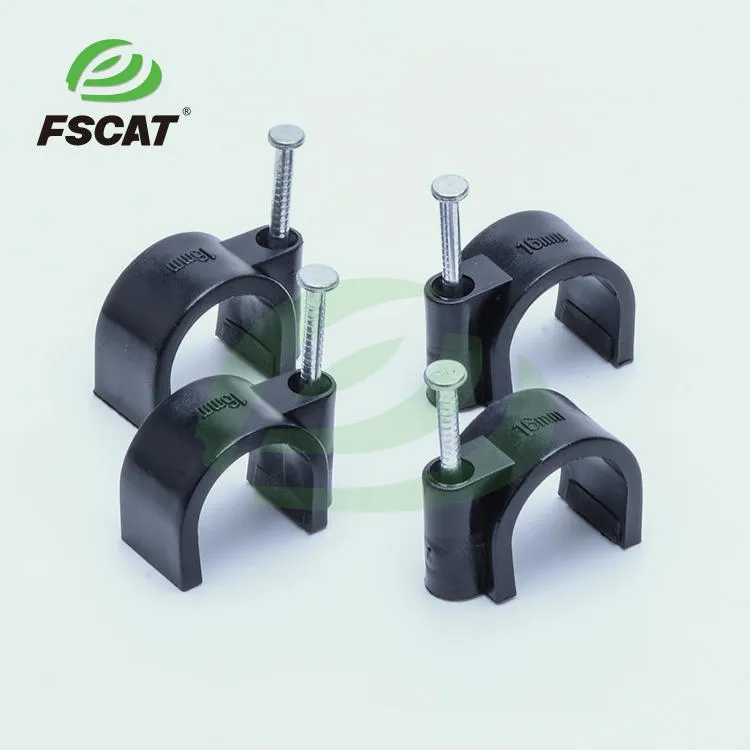
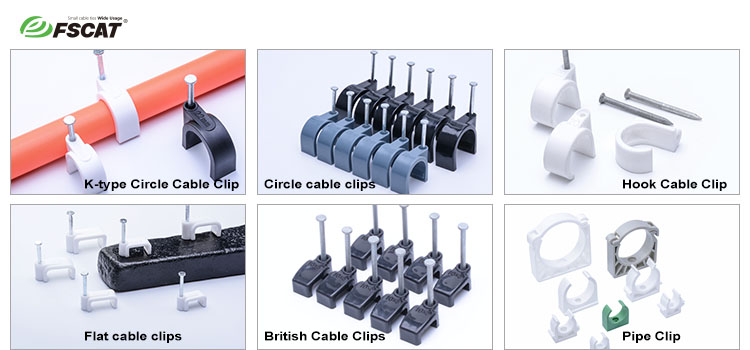
Usually, customers classify wire clamps into square and round, but in fact, we offer six different types of cable clips.
1. K type round wire clip
2. Round cable clip
3. Hook cable clip
4. British cable clip
5. Flat cable clip
6. Pipe clip
What material is better for cable clips?
If recycled materials are added to the cable clips, the clamps will become very stiff and prone to breaking during installation.
Therefore, we chose 100% new PE raw materials, while the nails are made of galvanized medium carbon steel.
These cable clips have excellent elasticity and impact resistance, ensuring durability.
What are the advantages of Cable clips?
1. Wide range of uses
Cable clips are suitable for various types of cables, including power cords, network cables, HDMI cables, etc.
2. Strong applicability
Cable clips come in a variety of sizes and designs to accommodate different cable thicknesses and quantities.
3. Easy to install
Cable clips are designed with simplicity and ease of installation in mind, therefore, cable clamps are popular and widely used in different countries.