 EN
EN ES
ES
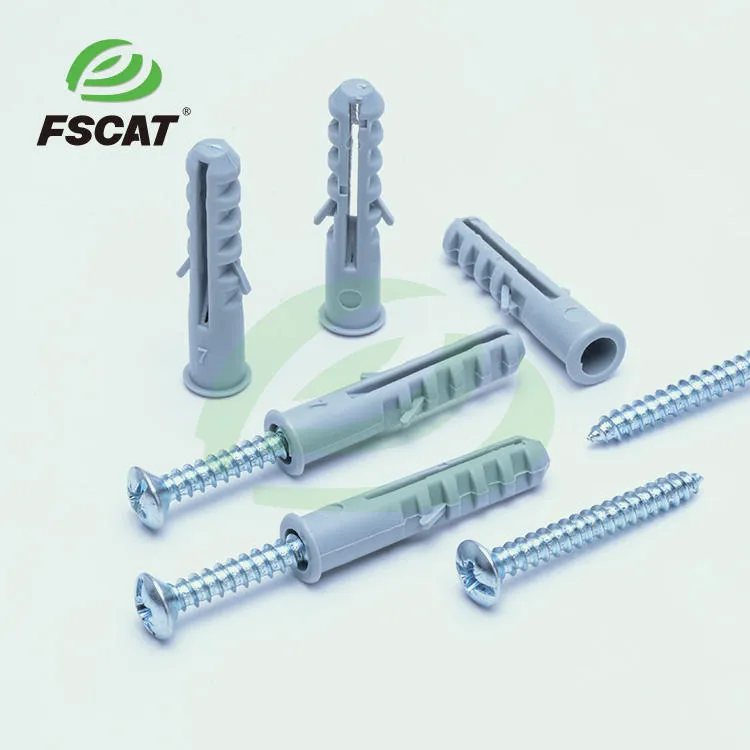
How to Use Plastic Wall Anchors?
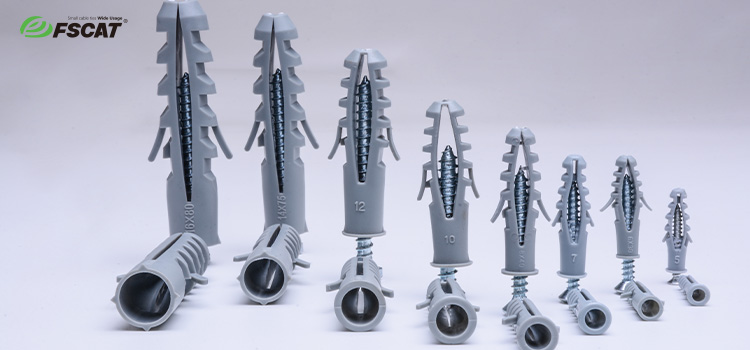
Plastic anchors are the ideal and economic fixing for light and medium loads.
Made from high-quality nylon, these are particularly robust during installation and guarantee permanent security.
What material is the expansion plug made of?
Commonly used raw materials for Plastic Anchor are Polyethylene (referred to as PE) and Polyamide commonly known as Nylon(abbreviated as PA).
The raw material is granular raw material, which is injected into the mold after being melted at high temperature.
Then to be reshaped into all kinds of different sizes and shapes.
How do you use plastic anchors?
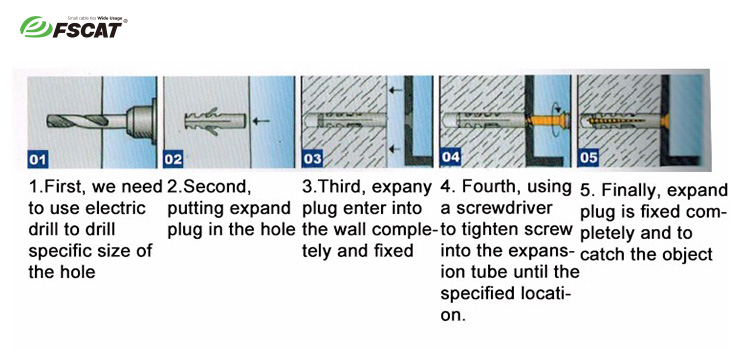
1. Drill holes on the wall first. The depth and diameter of the holes need to correspond to the size of the project product.
2. Knock the anchor into the wall with a rubber hammer
3. Align the anchor hole with the anchor bolt
4. Insert the screw and turn it clockwise to be flush with the anchor.
Why use plastic anchors?
1. Made of high-quality PE or PA raw materials (It’s up to you and your market to choose which material).
2. Unique expansion curve design, stronger anchoring force.
3. The fin blade prevents the anchor bolt from turning around in the wall.
4. The enlarged edge prevents the anchor from penetrating the wall.
5. With high-quality screws, the expansion tube has a better expansion effect.
Please feel free to contact us if you want to learn more about plastic anchors.
Our website: https://www.chinatls.com